Physical Address
304 North Cardinal St.
Dorchester Center, MA 02124
Physical Address
304 North Cardinal St.
Dorchester Center, MA 02124

People, Places and Life around East Tennessee
People, Places and Life around East Tennessee
Imagine walking through a garden in Brazil and encountering a tree that looks as though someone has glued hundreds of dark purple grapes to its trunk and branches. At first glance, it might seem like an optical illusion or something from a fantasy movie.
But this remarkable tree is entirely real.
Meet the jaboticaba, also spelled jabuticaba, one of Brazil’s most distinctive native fruits and a fascinating example of how wonderfully unusual nature can be.
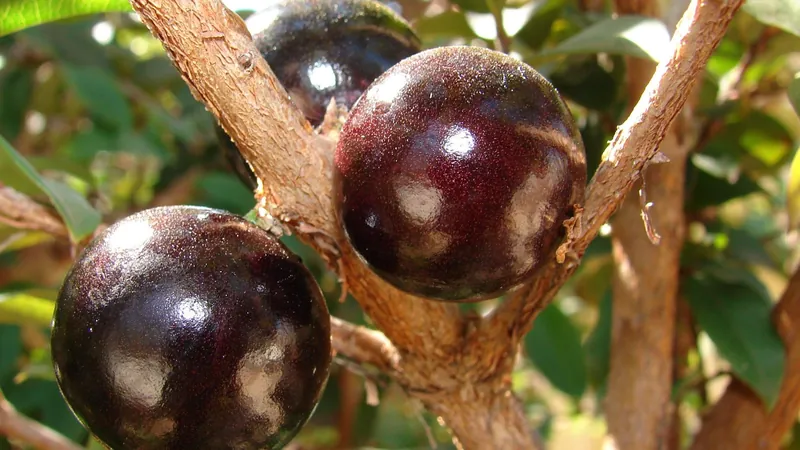
While most fruit trees produce their harvest among leaves and smaller branches, the jaboticaba does something quite different: it grows its fruit directly from the bark of its trunk and mature branches, sometimes covering nearly every visible inch of wood.
And its extraordinary appearance is only the beginning of the story.
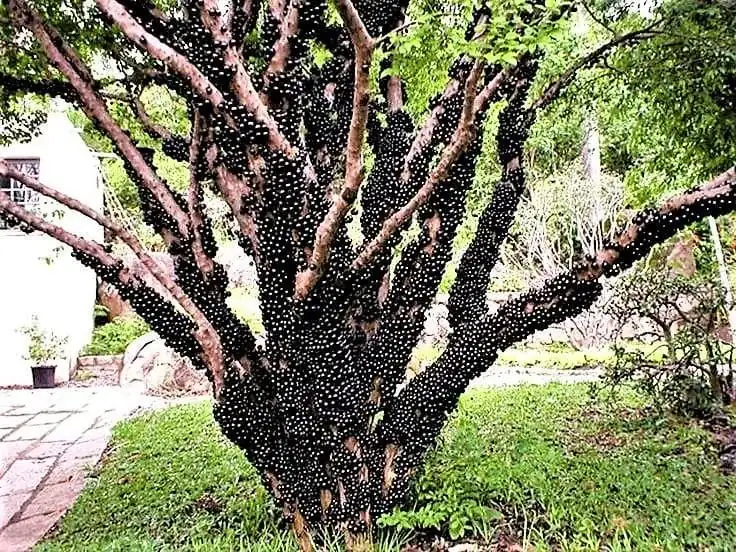
Known scientifically through several closely related species, including Plinia cauliflora, jaboticaba belongs to the myrtle family, which also includes guava and several other tropical fruits.
It is strongly associated with Brazil, where it has been appreciated for generations and remains a familiar sight in gardens, orchards, and rural properties.
Although often described as exclusively Brazilian, jaboticaba and its relatives also occur naturally in parts of neighboring South American countries. Nevertheless, Brazil remains the fruit’s cultural heartland and principal commercial producer.
Its name has Indigenous roots, originating from the Tupi language, reflecting a connection to the land that predates modern Brazil.
For many Brazilians, jaboticaba is more than an unusual fruit. It is a reminder of childhood afternoons, family gardens, and the pleasure of eating something freshly picked from a tree.
The most fascinating characteristic of the jaboticaba tree has a scientific name: cauliflory.
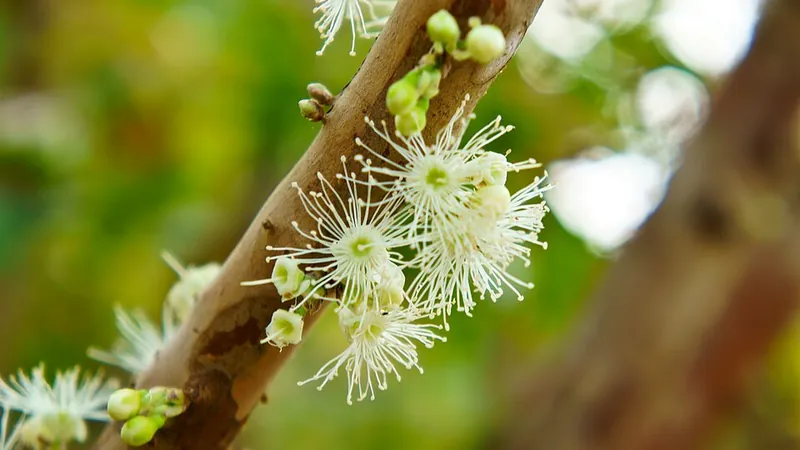
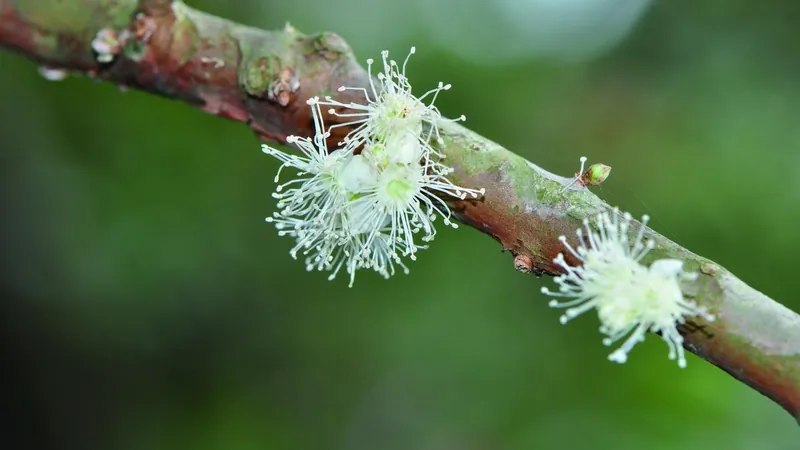
Cauliflory describes a botanical phenomenon in which flowers and fruits develop directly from a plant’s main trunk or older woody branches rather than from the younger growth where we normally expect to find them.
The process begins with small, delicate white flowers emerging directly from the bark. When flowering is particularly abundant, the trunk can appear covered in tiny white blossoms.
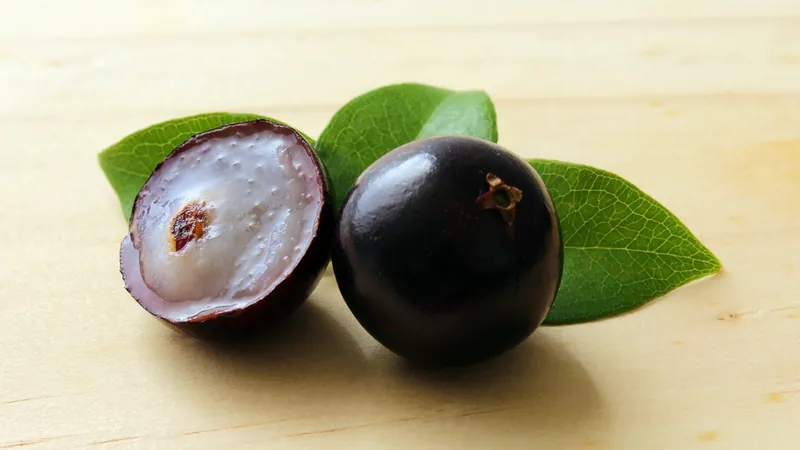
After pollination, these flowers develop into round fruits that gradually change color as they ripen, typically moving from green through reddish shades to deep purple or almost black.
The transformation can be spectacular.
A mature jaboticaba tree covered in ripe fruit looks unlike almost any familiar fruit tree in an American backyard.
Interestingly, jaboticaba is not the only plant that exhibits cauliflory. Cacao, the tree responsible for chocolate, and jackfruit trees can also produce flowers and fruits on their trunks or large branches.
However, few display the phenomenon as dramatically as jaboticaba, whose numerous small fruits can create the appearance of a tree decorated with dark, polished beads.
Despite its unusual appearance, jaboticaba is prized primarily for its flavor.
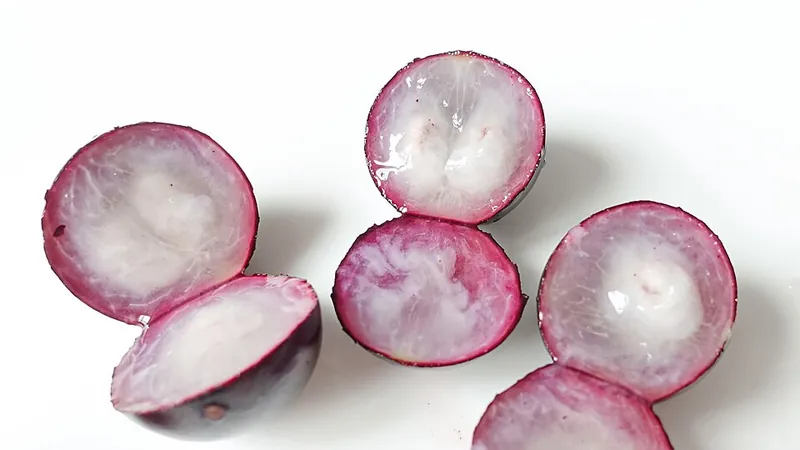
The fruit is small, round, and usually comparable in size to a large grape, although dimensions vary depending on the species and variety. Its skin is relatively thick, smooth, and deep purple when fully ripe. Inside is a juicy, translucent, whitish pulp with a soft, almost gelatinous consistency.
The flavor is refreshingly sweet, often balanced with a pleasant acidity. Some people compare it to a combination of grapes and other tropical fruits, although jaboticaba has its own distinctive taste.
The traditional way to eat one is wonderfully simple. Pick a ripe fruit, place it between your fingers, and gently squeeze. The skin splits, allowing the sweet pulp to slip directly into your mouth. The seeds can then be discarded.
The skin is edible, although it can be tart or astringent, particularly when compared with the sweet flesh. For many Brazilians, eating jaboticaba directly from the tree is the best way to experience it. No elaborate preparation is necessary. The fruit is already a treat.
If jaboticaba tastes so good, why is it almost impossible to find in an ordinary U.S. grocery store?
The answer has less to do with popularity and more to do with biology.
Jaboticaba is extremely perishable.
Once harvested, fresh fruit deteriorates relatively quickly, especially without refrigeration or careful handling. Its delicate flesh and moisture-rich composition make long-distance transportation and extended storage difficult.
Unlike apples, oranges, or certain grape varieties that can withstand commercial distribution systems, jaboticaba presents significant logistical challenges.
This short shelf life helps explain why the fruit remains relatively unfamiliar outside areas where it is cultivated.
In Brazil, it is often eaten soon after harvesting or processed into products that can be stored longer.
Its perishability is also part of its charm: enjoying a freshly picked jaboticaba is an experience that is difficult to reproduce thousands of miles from the orchard.
Although eating jaboticaba fresh is the most traditional experience, Brazilians have developed numerous delicious ways to preserve and enjoy it.
The fruit is used to make jams, jellies, juices, syrups, desserts, fermented beverages, and liqueurs.
Its dark-colored skin makes it particularly useful in preparations where rich color and concentrated flavor are desirable.
One of the best-known centers of jaboticaba culture is Sabará, in the Brazilian state of Minas Gerais.
The historic town has become famous for its jaboticaba products and its annual festival celebrating the harvest. Local producers transform the fruit into an impressive variety of artisanal specialties, including preserves, sweets, sauces, and beverages. In Sabará, jaboticaba represents more than food. It is connected to community identity, local craftsmanship, tourism, and traditions passed down through generations. What begins as a small fruit growing on a backyard tree has become an important symbol of regional culture.

Beyond its striking appearance and appealing taste, jaboticaba has attracted attention from researchers studying naturally occurring compounds in fruits.
Its dark skin contains anthocyanins, the pigments responsible for purple, blue, and reddish colors in many plants.
Jaboticaba also contains other polyphenols, including ellagitannins, which have been investigated for their antioxidant properties and potential biological effects.
Researchers are exploring how these compounds might contribute to human nutrition and health.
However, it is important to distinguish promising research from established medical benefits. Much of the scientific evidence has come from laboratory, animal, or relatively limited human studies.
Jaboticaba should therefore be appreciated as a nutritious, enjoyable fruit rather than promoted as a cure or treatment for disease.
Its combination of flavor, nutritional compounds, and culinary versatility is already more than enough reason to find it interesting.
Surprisingly, yes.
Although closely associated with Brazil, jaboticaba trees can be cultivated outside their native environment when climatic conditions are suitable.
In the United States, they are grown by tropical-fruit enthusiasts and home gardeners, particularly in warmer parts of Florida, as well as in some locations in California and Hawaii.
The trees generally prefer warm conditions, acidic soil, consistent moisture, and protection from severe cold.
They also have a characteristic that requires patience: many jaboticaba varieties grow slowly and can take several years to begin producing fruit, particularly when grown from seed.
Grafted plants and certain varieties may begin fruiting sooner.
Once established, however, a healthy tree can produce impressive harvests. Under favorable conditions, some varieties can flower and fruit more than once a year.
The tree is also attractive as an ornamental plant, with dense green foliage and distinctive bark that peels naturally to reveal contrasting shades underneath.
For gardeners in colder American regions, outdoor cultivation is much more challenging. Container growing with winter protection may be possible, but successful fruit production requires appropriate care and conditions.
We tend to develop certain expectations about the natural world.
Apples hang from branches. Strawberries grow close to the ground. Grapes develop on vines.
Then comes the jaboticaba, producing hundreds of fruits directly from the surface of its trunk, challenging our assumptions about how a fruit tree is supposed to look.
Its unusual biology is fascinating in its own right, but the fruit also offers a glimpse into a different food culture.
For someone growing up in Brazil, a jaboticaba tree may be an ordinary feature of a backyard. For someone encountering it for the first time, the same tree can seem almost unbelievable.
That contrast is part of what makes discovering the world’s lesser-known fruits so rewarding.
Sometimes the most extraordinary things in nature are not hidden deep in remote forests.
Sometimes they are growing in plain sight, right on the trunk of a tree.
And in Brazil, one of those remarkable discoveries happens to be delicious.
Have you ever seen or tasted jaboticaba? If you grew up in Brazil, does this unusual fruit bring back any childhood memories? And if you’ve never tried it, would you be curious to taste fruit that grows directly from a tree trunk?
YOUR COMMUNITY. YOUR VOICE.
Know an inspiring person, an interesting place, or a story worth sharing? Folks & Facts is built around our community, and we’d love to hear from you.