Physical Address
304 North Cardinal St.
Dorchester Center, MA 02124
Physical Address
304 North Cardinal St.
Dorchester Center, MA 02124

People, Places and Life around East Tennessee
People, Places and Life around East Tennessee
A snack offered for a photograph can teach a dangerous lesson—and leave the bear facing the consequences.
Seeing a black bear is one of the most memorable experiences a visitor can have in Gatlinburg, Tennessee. But when someone offers that bear food to bring it closer, entertain a crowd, or capture a video, the encounter can set a deadly chain of events in motion.
The person may leave with a photograph. The bear may be left with a learned behavior that puts its life at risk.
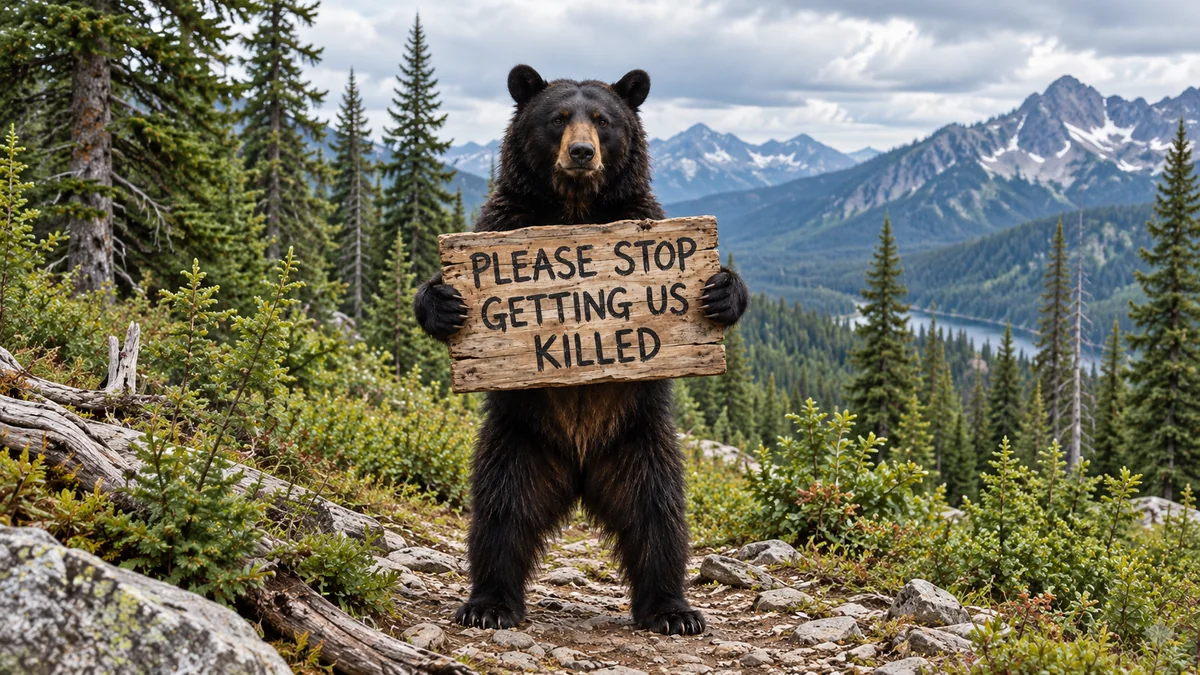
The National Park Service warns that even one feeding can teach a bear to seek food from humans. Bears that develop this association may lose their natural wariness and become more aggressive around people. In some cases, the outcome is euthanasia.
Bears are intelligent animals. When approaching people produces a food reward, they have a reason to try again. Wildlife managers call this food conditioning: a bear learns that people and the places they occupy offer something to eat. Over time, an animal that once kept its distance may begin approaching picnic tables, searching campsites, or moving closer to people carrying food. National Park Service bear-management guidance describes how these learned behaviors can escalate into increasingly persistent or aggressive encounters.
A bear standing calmly near someone is still a wild animal. Its willingness to approach should never be treated as permission to feed, touch, or pose beside it. Black bear attacks are rare, but they can cause serious injuries or death. Encouraging close contact creates opportunities for dangerous encounters that responsible behavior can help prevent.
Not every bear that receives human food will attack someone or be euthanized. The concern is that feeding can push an animal toward behavior that eventually becomes a serious public-safety threat. The National Park Service reports that food-conditioned bears can damage property and threaten people, and that bears are euthanized in the Smokies almost every year. A mother can also pass food-seeking behavior to her cubs, extending the consequences beyond one animal.
Relocation is not a guaranteed solution. Moving a bear does not necessarily erase what it has learned, and relocation itself carries risks. Park managers explain that moving bears can disrupt other bears’ territories and expose relocated animals to danger as they attempt to return home. Some dangerous behaviors can leave managers with euthanasia as the necessary response. By then, the opportunity to prevent the problem may already have passed.
Feeding does not require someone to offer food by hand. Unsecured garbage, picnic leftovers, food scraps, and accessible pet food can reward bears for entering human spaces. Tennessee wildlife officials advise against both intentional feeding and allowing bears access to these food sources. Feeding bears is also prohibited within Gatlinburg’s city limits. For residents, visitors, and rental-property owners, protecting bears means taking everyday precautions:
Every encounter is an opportunity to let a bear continue living without expecting a reward from people. When you feed a bear, you can contribute to the circumstances that get it killed. The consequences may come later, after you have gone home and someone else encounters the animal you helped teach. If you care about Gatlinburg’s bears, give them distance, secure your food, and let them remain wild. Their lives may depend on it.
Seeing a black bear is one of the most memorable experiences a visitor can have in Gatlinburg, Tennessee. But when someone offers that bear food to bring it closer, entertain a crowd, or capture a video, the encounter can set a deadly chain of events in motion. The person may leave with a photograph. The bear may be left with a learned behavior that puts its life at risk.
The National Park Service warns that even one feeding can teach a bear to seek food from humans. Bears that develop this association may lose their natural wariness and become more aggressive around people. In some cases, the outcome is euthanasia.