Physical Address
304 North Cardinal St.
Dorchester Center, MA 02124
Physical Address
304 North Cardinal St.
Dorchester Center, MA 02124

People, Places and Life around East Tennessee
People, Places and Life around East Tennessee
Understanding official alerts and checking the forecast for your exact location.
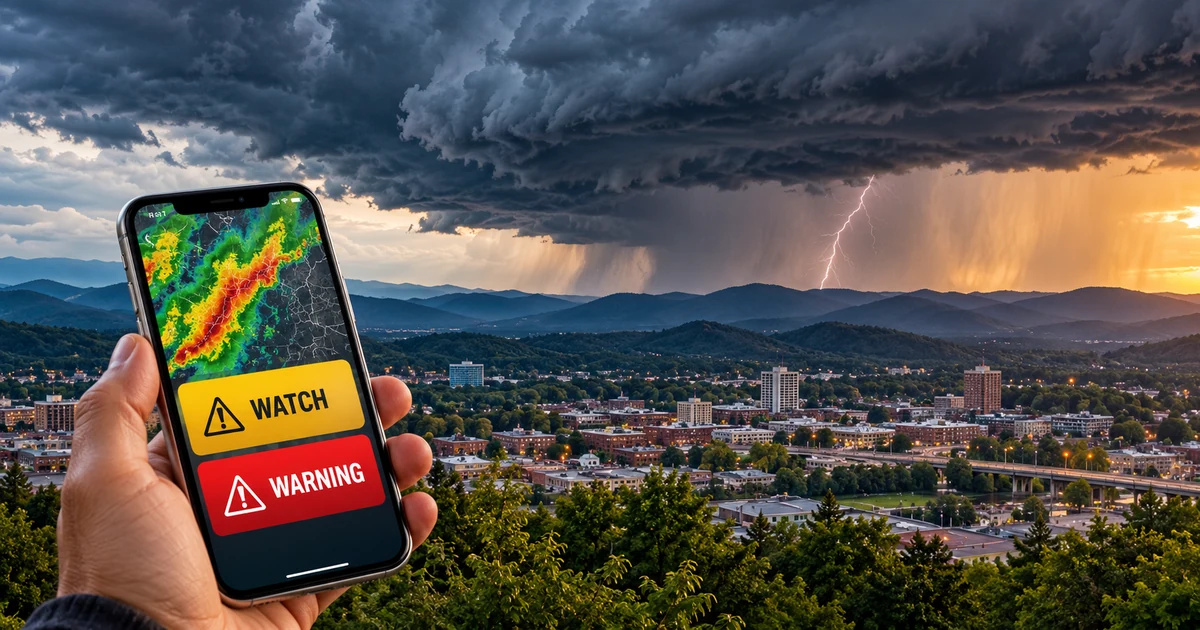
A weather alert that appears on a phone can seem straightforward—until a neighboring county gets a different message. Around the Tri-Cities, mountains, valleys, and state lines make it especially important to read the location and hazard named in an alert rather than assuming it applies to the entire region.
The National Weather Service uses a watch when conditions are favorable for a particular kind of hazardous weather. It is time to pay attention, review your plan, and keep a reliable way to receive new alerts. A warning means dangerous weather is occurring or expected soon in the identified area. It calls for the protective action specified in that warning.
An advisory can also be significant, particularly for travel. Always read the full alert for the specific conditions, affected places, timing, and recommended precautions.
The National Weather Service office in Morristown is responsible for warnings across 33 counties in East Tennessee, five in Southwest Virginia, and two in far southwestern North Carolina. That includes several counties surrounding Bristol, Johnson City, and Kingsport. Conditions can still be very different between a mountain community and a lower-elevation neighborhood.
For your daily forecast, enter your actual town or location on the National Weather Service website. During an active alert, consult its latest warning details, along with instructions from local emergency management officials.
Choose more than one way to receive weather notifications. Keep phone alerts enabled, consider a NOAA Weather Radio where practical, and know the safest place to shelter from severe winds. Flooded roads are particularly deceptive: never drive or walk through water covering a roadway.
This article is general preparedness information, not a live weather bulletin. For immediate decisions, use the current alerts from the National Weather Service and local public safety agencies.